Silhouettes of Children Carrying Books: Design Review
When evaluating a new graphic for production, I look past the digital preview and immediately visualize how the lines will translate into thread. As an experienced designer reviewing Silhouettes of Children Carrying Books, my first impression is one of nostalgic clarity. This illustration captures a timeless narrative of education and youth without relying on facial expressions or complex color gradients. For embroidery professionals and small business owners, this simplicity is a significant advantage. The solid black silhouette format suggests a design that relies on shape and negative space rather than intricate internal detailing, which often makes for a cleaner, more durable stitch-out on fabric.
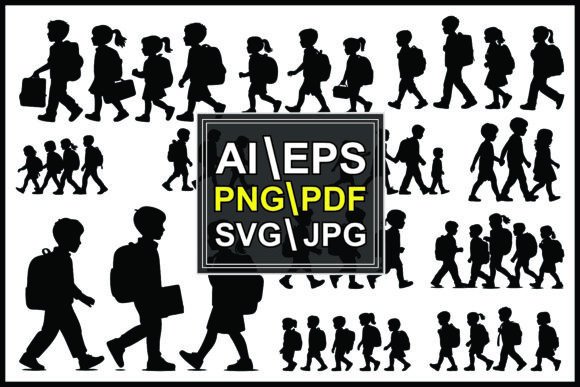
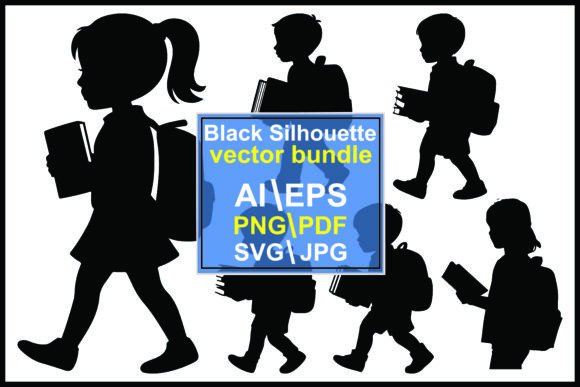
In the realm of Illustrations and Graphics, silhouettes are deceptively simple. They require perfect proportions because there is no shading to hide anatomical errors. Reviewing this specific asset, the grouping of children walking with backpacks and books creates a natural horizontal flow. This layout is ideal for placement across the chest of a sweatshirt or along the bottom hem of a tote bag. The visual weight feels balanced, suggesting it will anchor a project effectively without looking top-heavy or sparse. For an Etsy seller or boutique owner, this design evokes feelings of academic tradition and childhood innocence, making it highly marketable for back-to-school seasons, teacher appreciation gifts, or library merchandise.
Real-World Application: The Custom Tote Bag Test
To truly judge the viability of Silhouettes of Children Carrying Books, I mentally placed it on a canvas tote bag intended for a local library fundraiser. Tote bags are a staple handmade product, but they present unique challenges due to the coarse weave of canvas and the potential for puckering. In this scenario, the silhouette style performs exceptionally well. Unlike a photorealistic image that might require thousands of stitches and heavy stabilizer, a solid silhouette can often be executed with a optimized fill stitch or even a dense satin stitch border, depending on the size.
For this specific tote bag design, I envision using a crisp black thread against natural unbleached canvas. The high contrast ensures the figures remain legible from a distance. Because the children are carrying books and backpacks, the design tells a complete story without needing additional text, though it leaves ample room above or below for custom lettering like "City Library" or a student’s name. This versatility increases the perceived value of the finished product. Customers appreciate designs that feel intentional rather than generic clip art slapped onto fabric. When stitching this, I would recommend testing the stitch density first; canvas can be unforgiving, and you want to ensure the silhouette edges are sharp without pulling the fabric out of alignment.
Fabric Compatibility and Technical Considerations
While silhouettes are generally forgiving, Silhouettes of Children Carrying Books requires careful consideration regarding fabric texture and garment type. Not all projects are created equal, and knowing where this design thrives versus where it struggles is key to professional results.
- Smooth Cottons and Linens: These are the ideal substrates. Tea towels, pillow covers, and quilting cottons provide a flat surface that allows the clean lines of the silhouette to shine. The lack of texture interference means the embroidery file will render exactly as digitized.
- Fleece and Sweatshirt Material: This design is excellent for sweatshirt embroidery, but you must account for the pile. Fleece can swallow fine details. If the silhouette includes thin elements like book spines or backpack straps, consider adding a knockdown stitch underneath or slightly thickening those areas in your editing software before stitching.
- Stretchy Knits and Baby Clothes: Proceed with caution here. Large, dense silhouettes can create a "bulletproof vest" effect on lightweight baby onesies or stretchy t-shirts. If using this for baby embroidery, reduce the size significantly or verify that the digitizing uses light-density fills to maintain fabric drape.
- Caps and Curved Surfaces: Horizontal groupings of walking children can be tricky on caps. The curvature may distort the straight horizon line implied by the walking figures. Always test on a curved surface if planning commercial embroidery for hats.
Navigating Small Details and Stitch Types
The success of Silhouettes of Children Carrying Books hinges entirely on edge definition. In a digital graphic, a pixel-perfect line is guaranteed. In embroidery, that line is built by thread. If the design features extremely thin limbs or tiny book details, standard running stitches may get lost in the fabric weave. As a reviewer, I advise checking whether the machine embroidery design utilizes satin stitches for borders or adequately wide column stitches for narrow elements.
If you are creating an embroidered patch using this graphic, the silhouette format is perfect. Patches rely on bold shapes for visibility. However, ensure the outer edge has a proper merrow or satin border to prevent fraying. For apparel decorators, remember that solid black fill areas can sometimes appear shiny or plasticky if the density is too high. Adjusting the underlay and top stitch angle can give the silhouette a matte, professional finish that integrates better with the garment fibers.
Commercial Value and Brand Consistency
For creative entrepreneurs and digital product sellers, assets like Silhouettes of Children Carrying Books serve as foundational building blocks. The gender-neutral and faceless nature of silhouettes broadens the target audience significantly. Parents, teachers, and students all see themselves in these figures without the distraction of specific demographics. This universality makes the design a safer bet for inventory planning compared to character-specific licensed art.
When listing items on platforms like Etsy, presentation matters. Use this graphic to create cohesive collections. A printable mockup featuring this silhouette on a navy hoodie, a cream apron, and a denim jacket demonstrates range to potential buyers. It signals that your shop understands aesthetic consistency. Furthermore, because this falls under general design assets, it pairs beautifully with school crests, monograms, or institutional logos, allowing for easy personalization services that command higher price points.
Essential Pre-Production Checklist
Before committing this design to a final product or listing it as a digital embroidery file, run through this practical verification process. Skipping these steps is often the difference between a polished product and a customer return.
- Verify Licensing: Confirm whether your purchase includes commercial rights for finished products versus digital redistribution. Never assume; always check the specific terms for Silhouettes of Children Carrying Books.
- Test on Scrap Fabric: Do not stitch directly onto a sellable item first. Use a scrap of the exact fabric and stabilizer combination you intend to use. Check for registration issues where the books meet the hands.
- Assess Stabilizer Needs: Silhouettes can be dense. Ensure you are using adequate cut-away stabilizer for knits or tear-away for wovens to prevent distortion. Hooping tension should be firm but not stretched.
- Check Contrast: View the design in black and white. If the silhouette loses definition when converted to grayscale, it may struggle on dark fabrics where contrast is already low. You may need to add a white outline or background element for dark garments.
- Resize Responsibly: If scaling the design up or down, re-check stitch counts. Enlarging a silhouette too much can result in visible gaps, while shrinking it can cause thread breaks and needle damage.
Ultimately, Silhouettes of Children Carrying Books represents a versatile, emotionally resonant option for the embroidery community. Its strength lies in its adaptability across various mediums, from nursery decor to collegiate apparel. By treating this graphic not just as a picture, but as a structural blueprint for thread, makers can produce heirloom-quality items that celebrate learning and childhood with professional precision. Whether you are crafting a personalized gift for a graduate or stocking your shop for the autumn rush, this design offers a reliable foundation for beautiful, meaningful needlework.